long exposure landscape

What is a long exposure?

What is a long exposure?

A long exposure is when you use a shutter speed of about 1 second or longer.


Long exposures explained


When viewing landscape images you may have noticed clouds that streak across the sky. Waterfalls falls that appear to be in motion before your eyes. Water that is as smooth as glass reflecting mountain peaks with perfection. These images can appear to be highly edited when in fact, they are natural. This effect is created by utilizing your camera settings and certain filters. Taking long exposure photographs takes a bit of skill and a certain amount of gear. The images can be quite rewarding.

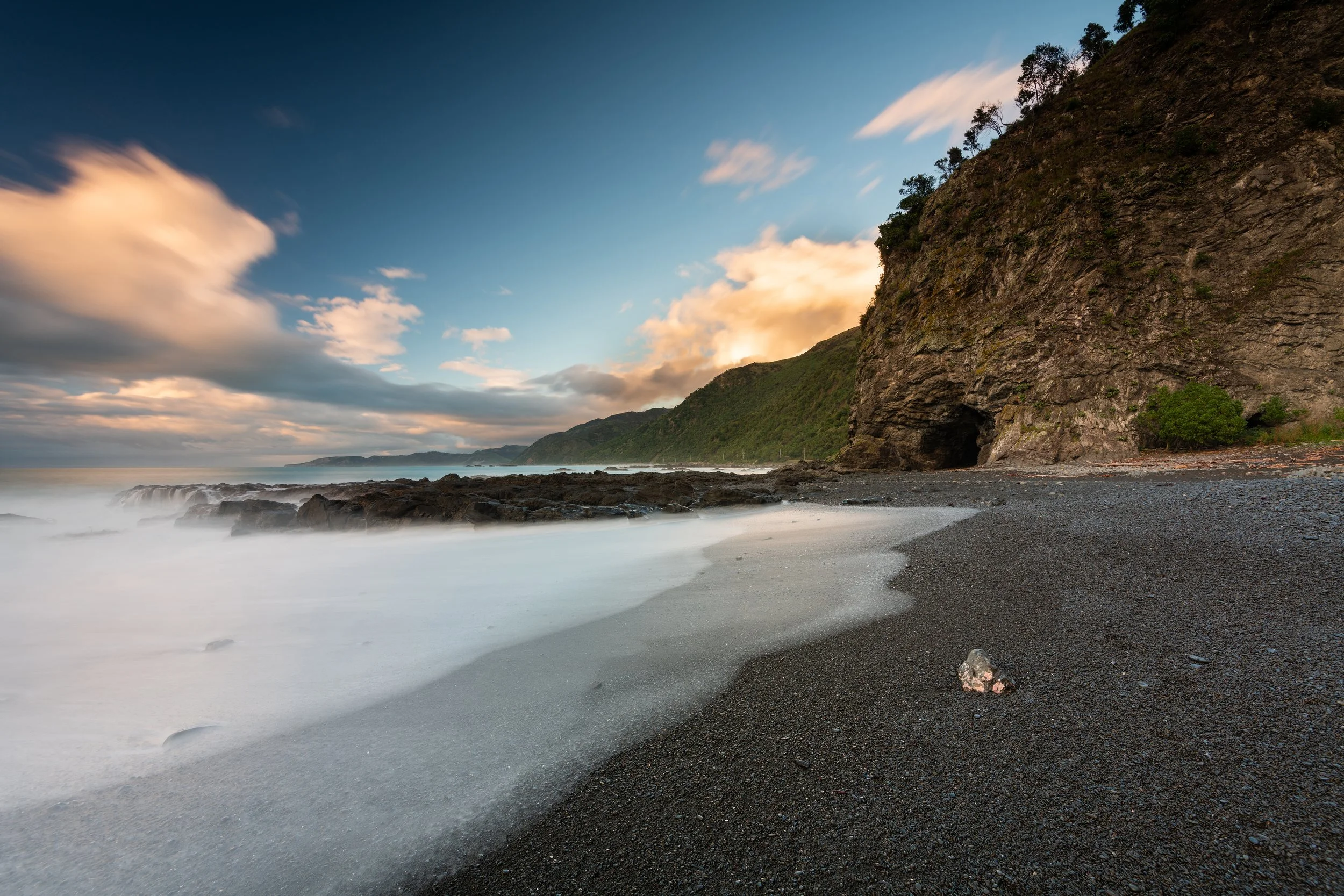
Notice in this image the clouds appear to be moving across the sky. Though there was a slight wind, the water appears to look as smooth as glass. This is one single image taken as a long exposure.

ISO 64. F/8. 30 Seconds

Watch how I captured this image on YouTube: Long Exposures Explained


Shutter Speed.

In order to do a long exposure you must understand what shutter speed is, and how to utilize it. Shutter speed is the length of time which your cameras shutter stays open to allow light to reach your cameras sensor. Depending on your camera type, it can usually be easily adjusted by turning a dial located on the back of your camera. Shutter speed is measured in seconds. For everyday shooting you will usually shoot at a shutter speed of 1/250th of a second or faster. If you try and use a slower shutter speed without a way to stabilize your camera, motion burr may occur.

Motion blur can ruin an image or it can provide artistic style if used correctly. Using a fast shutter speed will freeze action. Wildlife and sports photography rely heavily on using a fast shutter speed (usually 1/1000sec or faster) in order to freeze the action of their fast moving subjects. With landscape photography, a slow shutter speed is usually used (while using a tripod) as the majority of the subjects in the scene are stationary.

The above image was taken with a 2 minute and 34 second exposure.


The gear you need.

Camera:

You need a camera that that allows you to manually adjust the shutter speed.

Tripod:

A sturdy tripod is necessary to keep the camera completely still while taking a long exposure

Shutter Release:

Most cameras only allow a shutter speed of 30 seconds. Buying a shutter release will help to take images longer than 30 seconds by using it while your camera is in bulb mode.

Timer:

A stopwatch, or phone timer, is essential if you plan on doing exposures using bulb mode.

Filters:

Filters can allow you to take long exposures even during situations with a lot of light. Filters come in all shapes and sizes. Neutral density filters are what you need to slow the shutter speed of your camera. Filters are measured in stops of light they block out. 6-Stop (ND64) and 10-stop(ND100) are popular among landscape photographers. Filters are expensive as they are made from high quality glass. DO NOT BUY CHEAP FILTERS. Cheap filters are made with low quality glass that can significantly lower your image quality. I recommend purchasing a square/ stackable filter system as it is the most versatile option. Starting off with a single screw on ND filter is also a great way to learn how to take long exposures, and you can always upgrade later.


The best filters for landscape photography.

Are square filters worth buying? Indeed they are, here’s why.


Here is the gear I use for Landscape Photography: My Gear


On location.

You have invested in all of the necessary gear, hiked to an amazing viewpoint and are ready to take a long exposure, but how? First you need to figure out if a long exposure is necessary for the scene. A long exposure needs movement to be effective. Clouds moving through the sky, and water flowing are both great examples of how a long exposure can benefit an image.

Set up:

Spend a lot of time to frame your composition. Make sure your tripod is on a sturdy surface and will not move. If the camera moves while the shutter is open motion blur can occur, ruining your image.

Settings:

Knowing how to shoot in manual mode is a big advantage when taking a long exposure. You will want your ISO as low as possible to reduce the amount of noise. You also want to shoot between F/8 and F/11 as these are generally when you will receive the sharpest results.

Test Shots:

Take a few test shot before adding your filters to check focus and again fine tune your composition.

Focus FIRST:

Sometime when stacking on several filters your camera will struggle with finding focus, its very important to have your focus locked in before adding the filters.

Filters:

Add the ND filter(s) to your camera.

Set shutter speed.

If you are using a shutter release you have to figure out how long you will take the exposure by using conversion apps or using a formula.

Take the image.

Be prepared for a lot of trial and error especially when doing several minute exposures.

Tips.

Turn off auto focus to ensure your camera does not change focus when shooting.

Set your camera to timer mode using a 5 second timer to avoid camera shake when pressing the shutter.

Cover your viewfinder, light can find its way to your cameras sensor from the viewfinder affecting the image.

ISO 100. F/8. 5 seconds.


When not to take a long exposure.

It’s easy to always want to use your filters to capture a long exposure, but sometimes even when doing a long exposure correctly it can ruin an image. Here are some examples of when you should leave your filters in your bag:

No movement:

In order to make the effect of a long exposure visible you must have movement in your scene. Water and clouds are great examples. If there is no movement there is no reason to take a long exposure.

Too much movement:

If it’s a very windy day I would avoid taking a long exposure. If your main subject is moving, a long exposure will not turn out to be pleasing. Sometimes this can add artistic effects if the movement is complimenting the stationary subject or if the movement is not easily noticed.

ISO 64. F/11 30 Seconds.

The above image was taken during a very windy day. Notice the motion blur in mostly all of the trees and the bushes in the foreground. In my opinion, this makes the image appear a bit off and just not right.

ISO 64. F/9 3 Minutes 17 seconds.

The above image was shot on a day with a light breeze. If you look closely at the leaves on the tree you can see some motion blur present. I don’t believe this has ruined the image as the mountain in the background, the tree trunk and foreground remain sharp.


The 10-Stop ND Filter


Especially among landscape photographers the 10-stop filter is somewhat a legend. There is nothing more rewarding and unique than capturing a several minute exposure at sunset. A 10-stop filter can be very helpful in creating multi-minute exposures. This can produce some very unique and artistic results. 10-stop filters can be challenging to use in order to get a correct exposure, and require a lot of practice.

ISO 64. F/11. 6 minutes 12 seconds.


Watch how I captered the above image with a 6 minute exposure


Proceed with caution. When photographing sunrise or sunset you only have about 10 minutes, or less, of amazing light. When using a 10-stop ND filter an exposure can be several minutes, meaning that you might only get once chance to take an image. I have missed many shots by ending the exposure too soon, having motion blur present, or missing focus when trying to do a several minute exposure.

How to use a 10-stop ND filter.


The best way to get better at taking long exposures it to practice. Go get some ND filters and get out and shoot! The more you experiment and practice, the more comfortable you will be taking long exposures.


Want to learn even more about long exposures?