
FOR A FULL LIST OF THE GEAR I AM TAKING, SCROLL TO THE BOTTOM.
Some of the links in this post are affiliate links and if you choose to purchase an item, I may get a small commission.
A camera is a great tool to document the events of daily life, especially when traveling. The new sights and experiences of the newly witnessed beg to be recorded to show friends and family of your travels. I have been traveling for the last nine years, and I always have my camera and gear on hand.
Here’s what I am taking on a five month trip to Asia; I hope it is helpful as you choose what to take with you on your own travels.
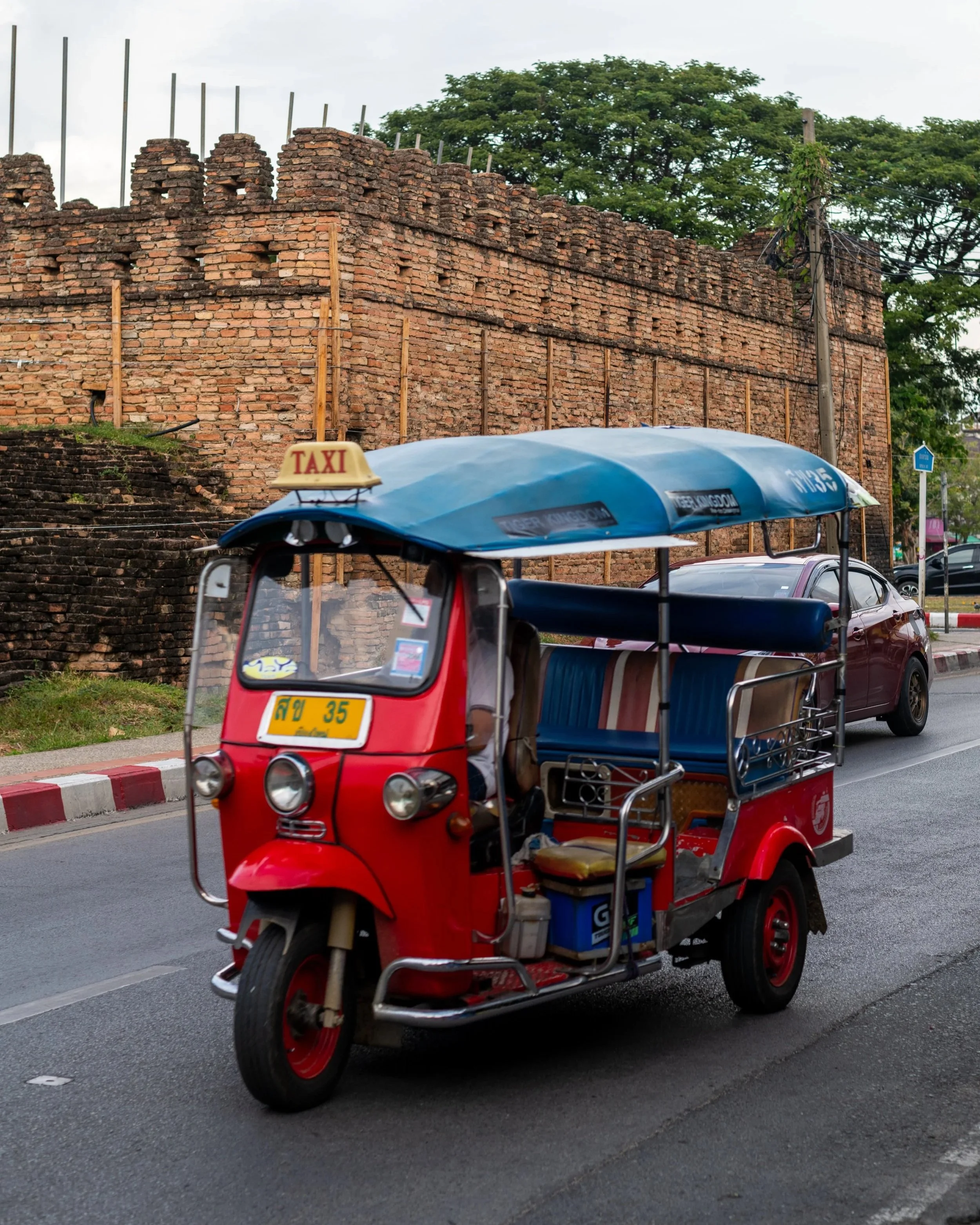
How will you get around?: Tuk-tuk!?
For photographers, it is very easy to take way more than you need. “Maybe I’ll need this lens. Maybe I’ll need this extra camera…maybe I need to bring four extra hard drives, because WHAT IF!?” The “what ifs” will get you. For our trip, we will be traveling for 5 consecutive months, so I am taking a lot more gear than I would take if I was on a shorter holiday. That being said, carrying around a lot of gear is not ideal and can be quite cumbersome. My camera bag alone weighs in at 23lbs. Oof.
We will be essentially backpacking, and living on the cheap. Traveling on mostly tourist busses, planes and trains and the occasional van, we will move around Southeast Asia at a steady pace.
I have traveled with this much gear before, and while I can’t say I recommend it for each trip, it’s possible to make it work. (Be prepared to pay a bit more for extra weight or luggage on certain airlines, though. Some are very strict and will weigh luggage at the counter before handing over your ticket.) If you are on a private tour, then taking that extra bit of gear won’t be an issue, but if you are traveling like we are, every pound counts. Preparation—and knowing what is essential for your specific trip—is key.
Conditions: Rain, snow, sleet or shine.
Where are you going? Will it be cold, hot, rainy, sandy, or windy? The climate has a lot to do with what extra little bits and bobs I’ll bring along. South East Asia is going to be very hot, humid and rainy. I have plenty of rain gear and rain covers to help protect my gear if I happen to get caught out in the elements. I also have about a dozen desiccant packets (those small packets you often find in packages that are labeled “Do Not Eat”) that help absorb moisture to prevent any condensation in my gear as I go from the a/c to the outside. My camera body and all my lenses are “weathersealed”. This doesn’t mean that I will use them in a downpour, but if I happen to be shooting and a light rain sets in, I don’t get too worried.
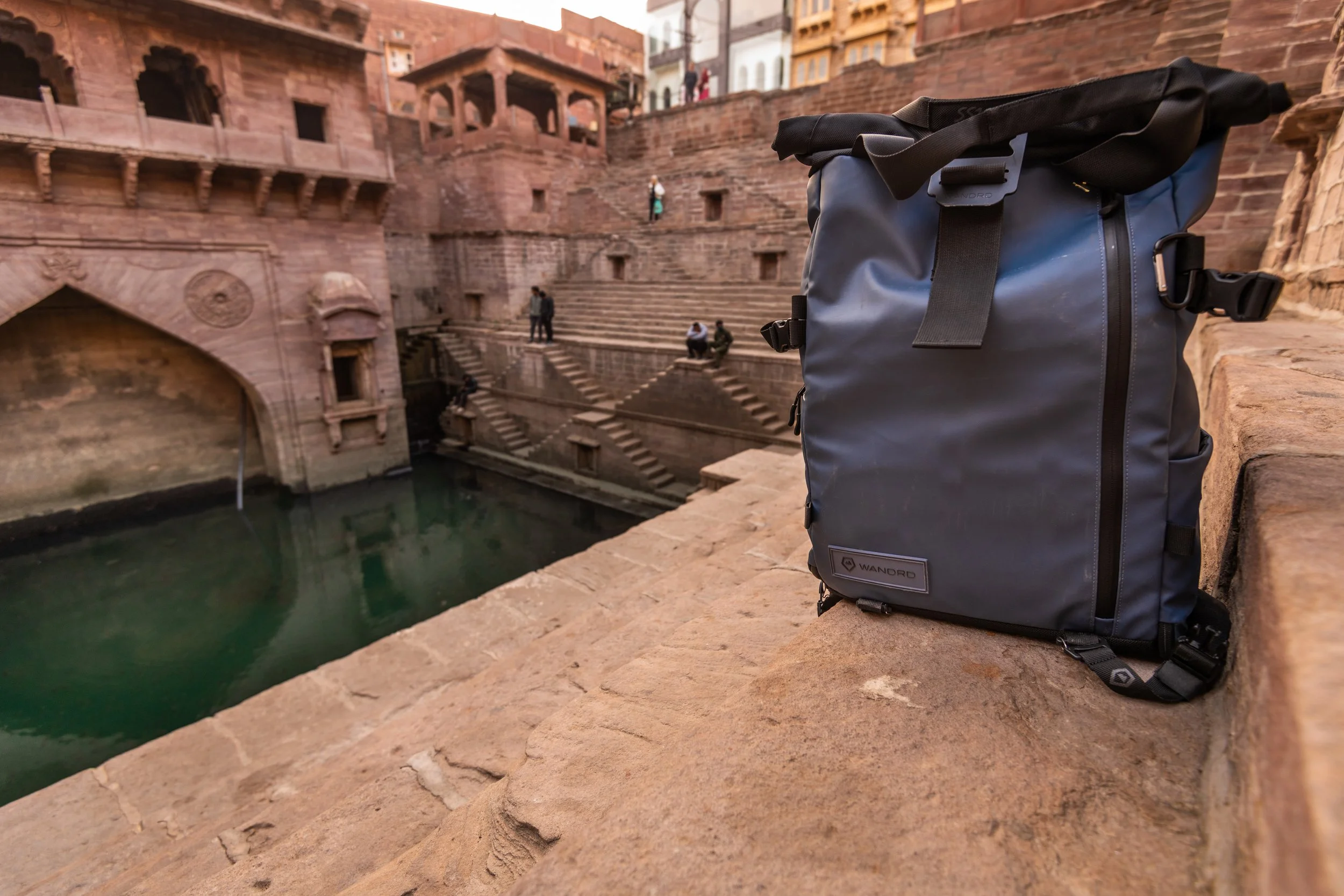
Weather sealed gear isn’t a necessity but it does add an extra layer of protection. I also use a wether sealed camera bag WANDRD PRVKE 31L that allows me to be caught in light rain for a little bit without having to worry about my gear getting wet. I also have a rain cover handy to put on if it starts to downpour.
The Backpack: It will always be with you.
One time when I was in Taiwan a local told me the best way they can identify a tourist is that they always wear a backpack. This is very true. When we are on holiday we usually have a backpack on at all times. It holds sunscreen, a change of clothes, jacket, essentials, and most important of all, our camera. A camera bag is the most important piece of gear when you travel. It will always be with you and you must wear it as you traverse airports, busses and busy streets as you traverse your way to your hotel. It must be comfortable, practical, and easily accessible.
For my particular needs, the WANDRD PRVKE 31L fits the bill perfectly. This bag can do it all. It can hold my full frame camera, wide angle lens, 70-200 lens and 50mm prime all in the removable camera cube compartment. It can hold a 16in Macbook Pro as well as filters and any other accessories I may need, as well as a jacket and a bottle of water. One of the best things I like about this bag is it doesn’t scream “camera bag”. It is a bit more discreet than some other ones on the market, and depending on what you pack it with, you can easily slide it into the overhead compartment on an airplane or slip through small openings on crowded streets or shops. It’s also incredibly durable; I’m on my second long Asia trip with this bag, and it is holding up perfectly.
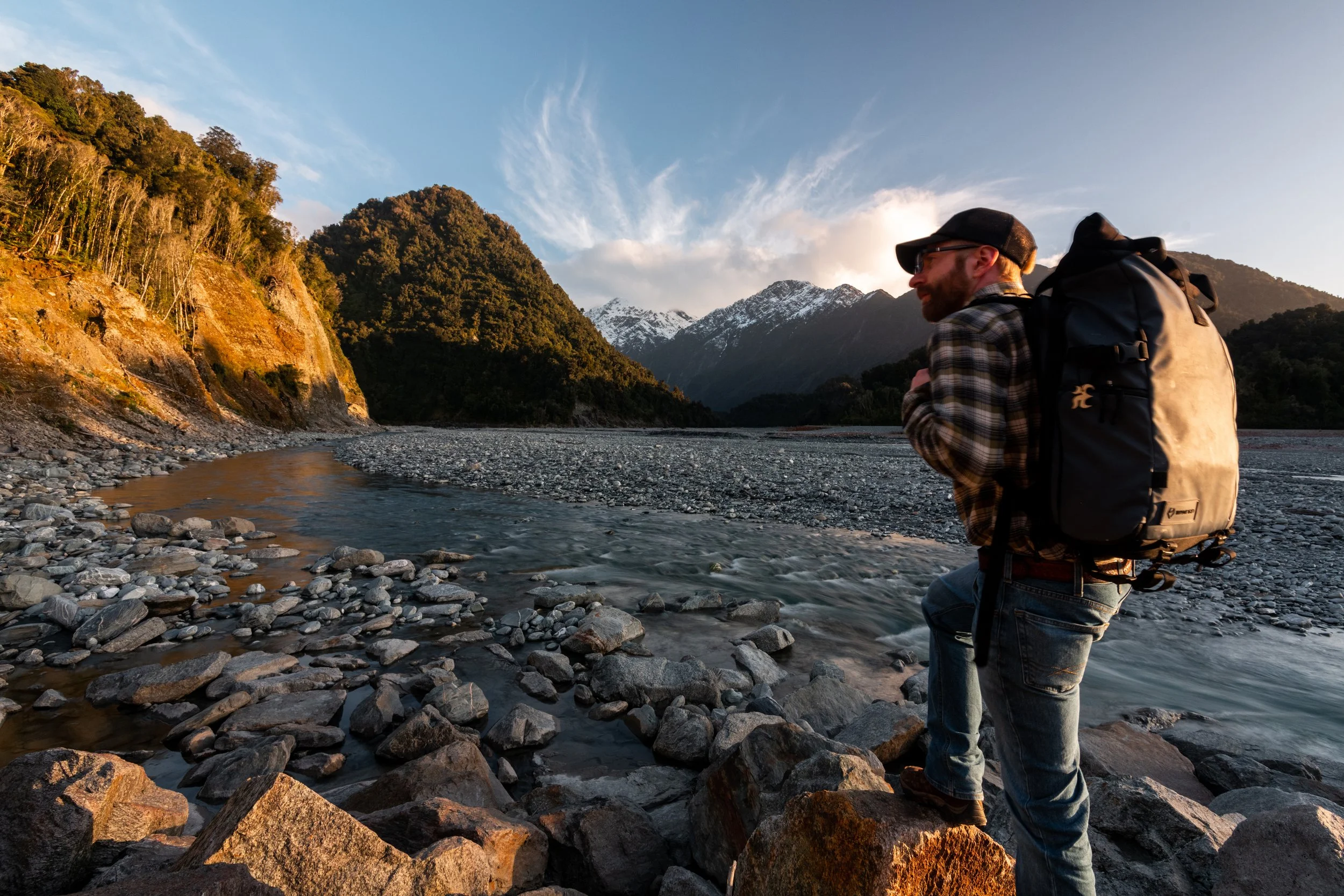
Spend a lot of time finding the appropriate backpack for you. Try them on and do plenty of research to find one that fits your needs. Once you get one, try it out. Load up all the gear you plan on traveling with, and go do a shoot at your local area to make sure it’s comfortable and it fits. Nothing is worse than realizing you hate your backpack at the start of a trip and don’t have time to change it, or have to get a new one last minute. Believe me, I know.
The Camera: Make sure you know how to use it.
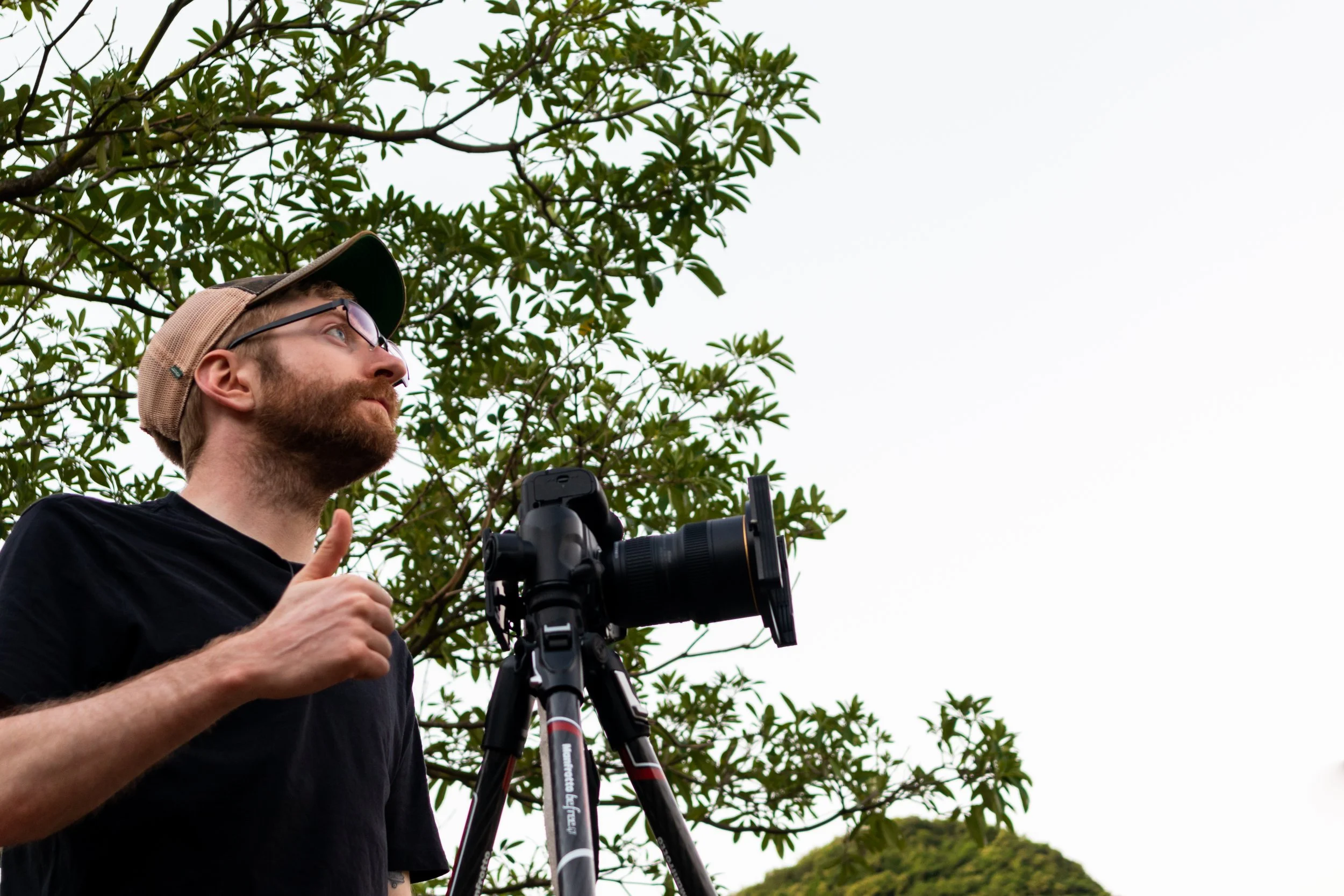
New cameras these days, specifically smart phones, make photography more accessible than ever. Great shot are relatively easy to achieve and editing image can be done with a click of a button. But traditional cameras are far from dead. There is nothing like carefully composing an image through a viewfinder, using a tripod to capture a long exposure with the last bit of sunlight as it sets behind foreign shores.
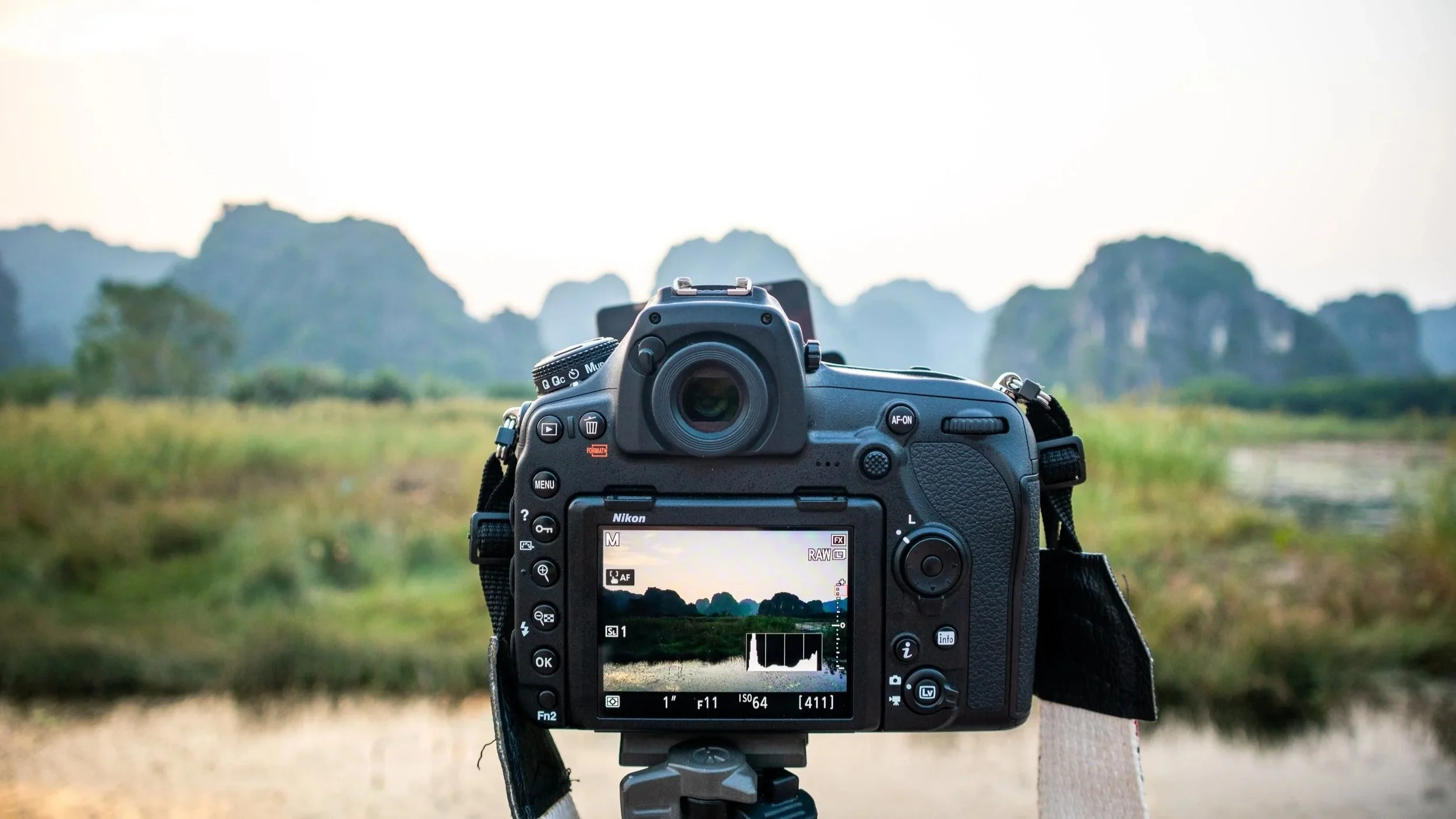
In a world of new technologies and mirrorless cameras I still shoot with a 10 year old full frame DSLR. I will eventually make the jump to mirrorless but not quite yet. I use a Nikon D850 and it is the best all around camera that suites all my photographic needs, and then some. Shooting with a large camera does have its drawbacks. It is heavy and can be hard to travel around with. It can also make you stand out in populated areas.
Make sure you choose the camera that is best for your needs depending on your photography style. DO NOT buy a new camera the day before you leave, give yourself a few weeks or even months to familiarize yourself with a new camera before you take it on a big trip. Learn all the settings, troubleshooting, how to change lenses, etc. to make sure you can easily capture those special moments.
The Lenses: What will be the subjects?
Will you be shooting wildlife, landscapes, portraits or just taking a camera to document the trip? What you plan on experiencing while traveling directly influences what you should bring. It’s best to have somewhat of a plan in place before you set off. I rarely have a plan of where I want to go, but I do usually plan on shooting three main categories of photography: landscape, wildlife, and travel.
All three categories have gear that can be used for aspects of each one. I carry around a 16mm-36mm F/4, a 50mm F/1.8 and a 70mm-200mm F/2.8. The wide angle is perfect for landscapes, cityscapes, and visiting temples. The 50mm is perfect for street photography and is light and compact to carry around on daily shooting expeditions. The 70mm-200mm lens is ideal for landscapes and wildlife.
For wildlife photography, it is ideal to have a super telephoto lens (200mm-500mm). These lenses are huge and can be very cumbersome and not practical to carry around. Instead, I carry a 70mm-200mm F/2.8. I can use this lens for landscapes, as well as wildlife. Having the 2.8 aperture is very helpful in low light conditions. It has helped me capture some stunning wildlife images— I just have to get closer.
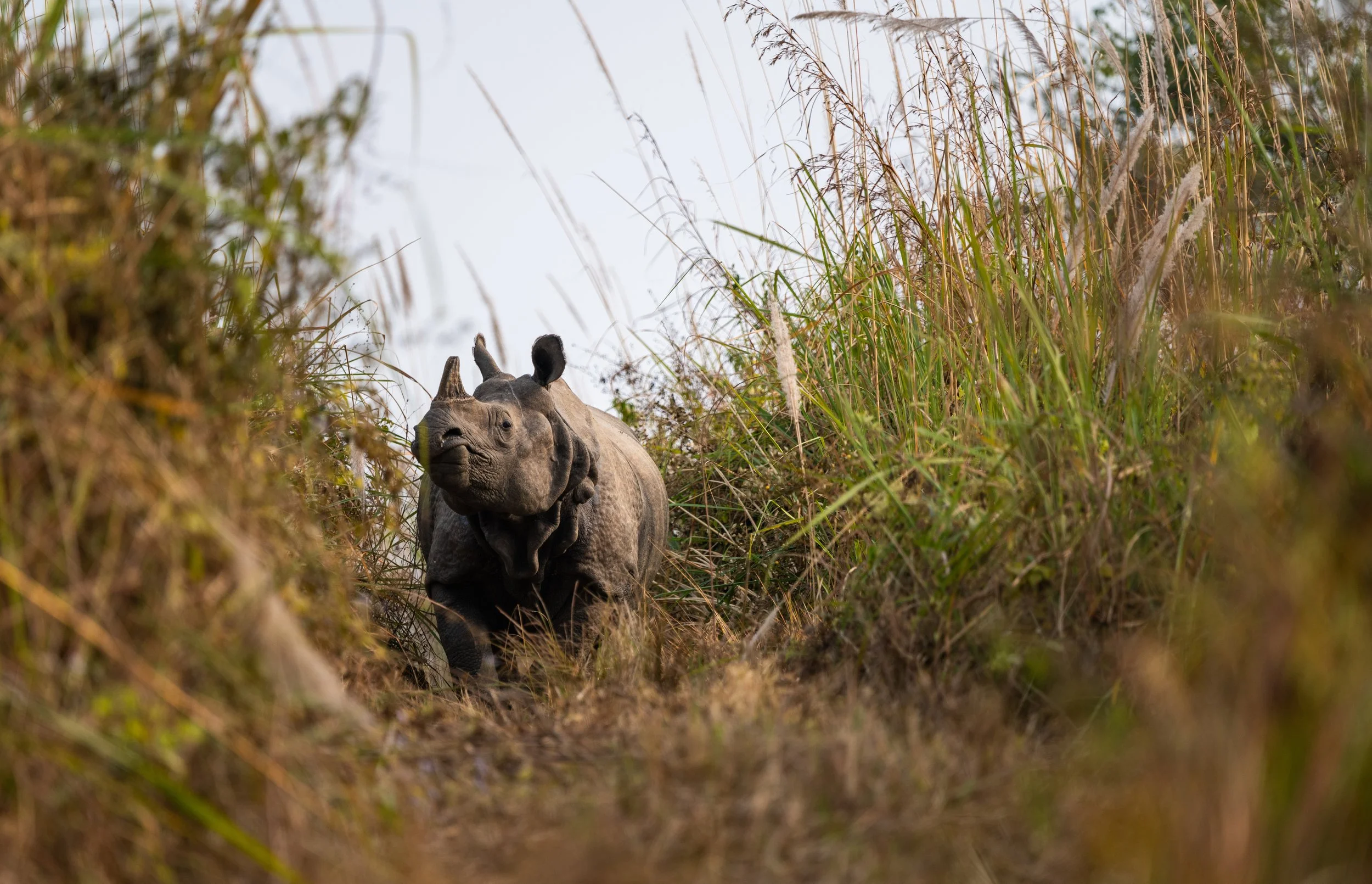
This image was taken with a 70mm-200mm. Since I was on a 10 hour hike to find rhinos in Nepal, carrying around a super telephoto lens was just not practical.
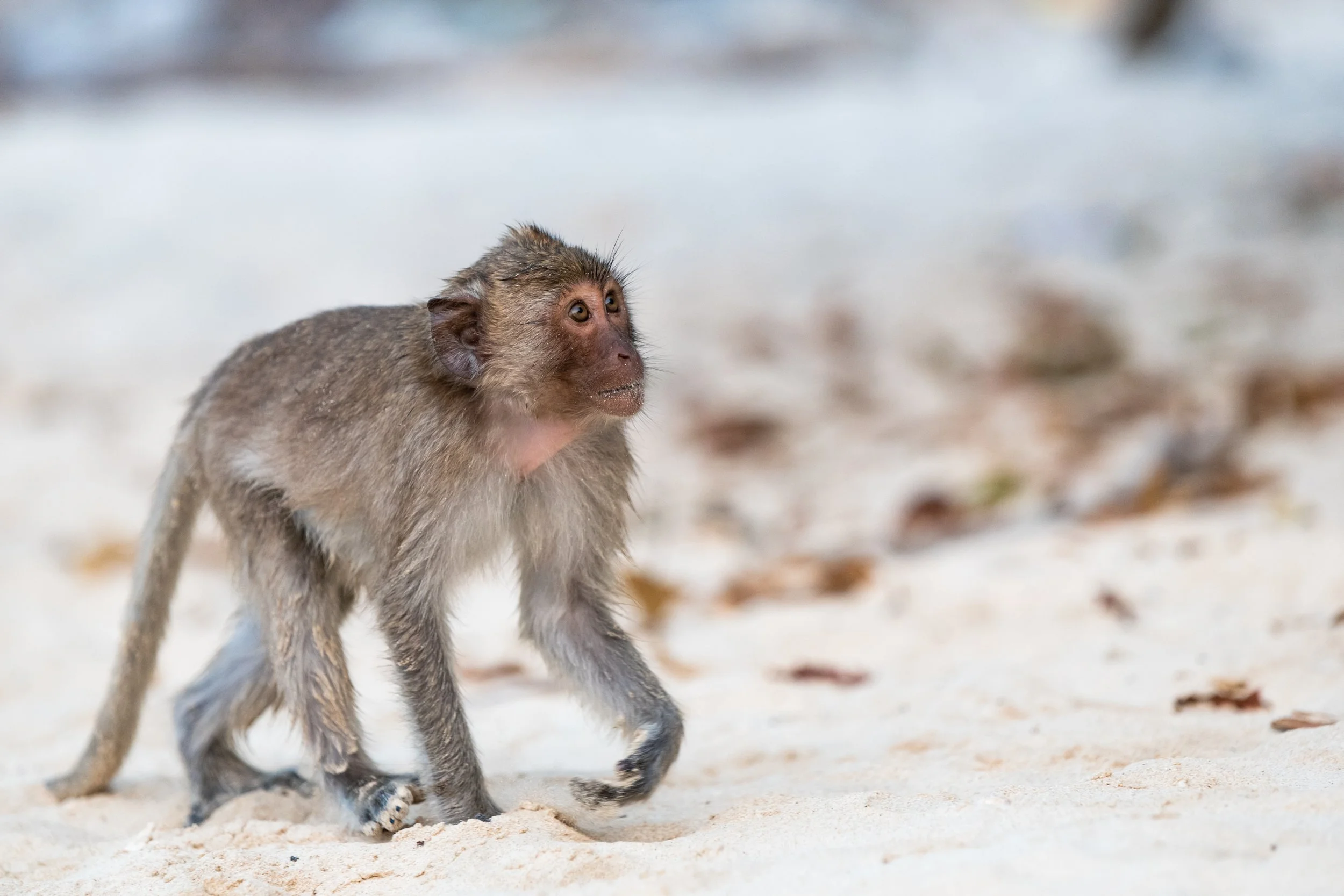
Also taken with a 70-200mm lens, this was taken on Monkey Island in Vietnam. Taking a larger lens to this location would have been more of a challenge, as we had to jump off the boat taxi into the water.
Both of the above encounters could have benefitted from a longer lens, but sometimes using the smaller, more portable option is the better choice, overall. If you find you absolutely need a larger lens for certain expeditions, one good option is to rent one from a local camera shop. This will save you from having to transport more gear for the entire trip, when you may only need the lens for a day or two.
Backup Storage: Always be prepared.
Backing up your images while traveling is very important. Bags can get misplaced or stolen, photos can get accidentally deleted and memory cards can fail. Its always best to have your photos in more than one place to ensure this doesn’t happen. My camera has 2 card slots, so I always set it to duplicate the files. If the first card fails, I have a backup. I also have 2 external hard drives that I will copy all the raw files to, and a few flash drives to which I will back up the edited photos. I also don’t clear my memory cards until I have to, and have about 5 SD cards (64 gb each) I bring with me on each trip.
The Accessories: Do you really need all that?
I take my square filters, tripod, GoPro, shutter release, chargers, Macbook pro, extra batteries and a few other things that might come in handy. Those few “extras” are chosen at each photographer’s discretion, as all preferences and needs are different! Where I travel, quality photography gear can be hard to find, so I make sure I bring some extras in case I need them. I need a full size tripod because I do a lot of landscape photography. My tripod is essential because when shooting with my D850, I need something that can hold the weight of the camera while taking long exposures. I use a Manfrotto BeFree Carbon Fiber Travel Tripod which has suited all of my needs in various places over the years. The carbon fiber make it relatively lightweight and easy to carry around, yet sturdy enough to support my camera.
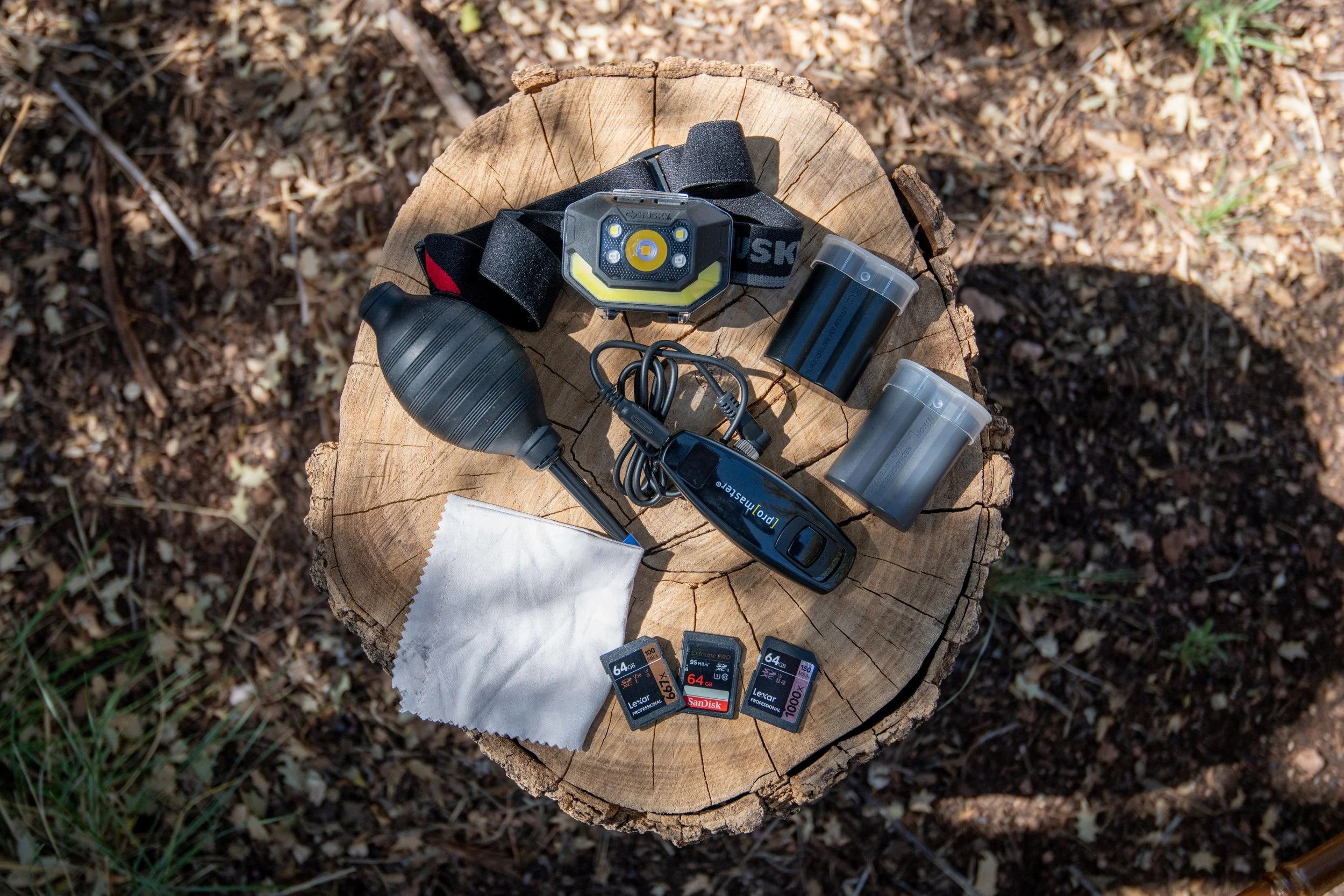
Microfiber cloths and a rocket blower go a long way for those quick cleans in the field. I also take lens wipes and lens cleaner to do a more detailed cleaning of my lenses in the hotel room. A head torch is also something I have in my bag to help me find my way back after a sunset shoot.
Less is more
I try and pack a month or so before a trip to sort out exactly what I need. Often, I also make a detailed list of places I plan to visit, and a loose plan of what I would like to photograph in each place. As in all things with photography, there are often surprises, so I’ll pack a few extras here and there. I usually use the “better to have it and not need it, than to need it and not have it” approach, which, I’ll be the first to admit, has come back to bite me on occasion. Sometimes I return with a lot of unused gear or gear I could have substituted out with a lighter, more compact option. However, in the end, as with all things, it’s all about balance and compromise. Choose what you think will be right for you and your trip. Keep in mind elements like portability, weight, what you can comfortably carry on your back for long walks or treks, and what gear you will need for your chosen subjects.
This entire planning process takes time. Even after traveling for 9 years, I still take weeks to decide what I will bring with me for each trip. But if you plan well, prepare, and really put a lot of thought into what you would like to shoot and how you plan to do it, you’ll be well prepared for a great trip-and have stunning photos upon your return.
Best of luck and happy travels!
My Gear
CAMERA BODy:
Nikon D850- Main Camera, Full Frame, 45.7mp. All around workhorse, but very large and heavy.
LENSES:
Tamron 70-200 G2: Used for landscape and wildlife
Nikon AF-S FX NIKKOR 16-35mm F/4G ED- Very sharp wide angle lens for landscapes and tight cityscapes.
Nikon AF-S FX NIKKOR 50mm F/1.8G- Sharp prime with large aperture, great for all around street photography.
GoPro:
GoPro Hero 12- Video camera used for vlogging.
TRIPOD:
Manfrotto BeFree Carbon Fiber Travel Tripod- For being so small and compact, this tripod is what I use on all my Asia trips. Very sturdy and stable.
FILTERS: Nisi Filters
NiSi filter system- Great square filter system for landscape photography. (The link is to the newest model)
NiSi Landscape Polarizer
VIDEO:
Rode Video Micro- Great little backup mic
Rode Wireless Go- Such a convenient to use and amazing wireless mic system
CAMERA BAGS:
Wandrd Prvk 31L- The best travel photography backpack.
EDITING:
Adobe Lightroom Classic
Adobe Photoshop CC