wide angle lens

The first lens you should buy for landscape photography

The first lens you should buy for landscape photography


Landscape photography allows you to immerse yourself in nature. Hiking through the natural world and chasing light in search of an image can be very rewarding. It is very important you have the appropriate lens to be able to capture stunning images. But where do you start, what lens should you buy first? Lenses can be very expensive and there are an overwhelming amount of options. I have been taking landscape images for the past 12 years all around the world. I will share my recommendation for the first lens you should invest in to start your landscape photography journey.

which lens to buy first?


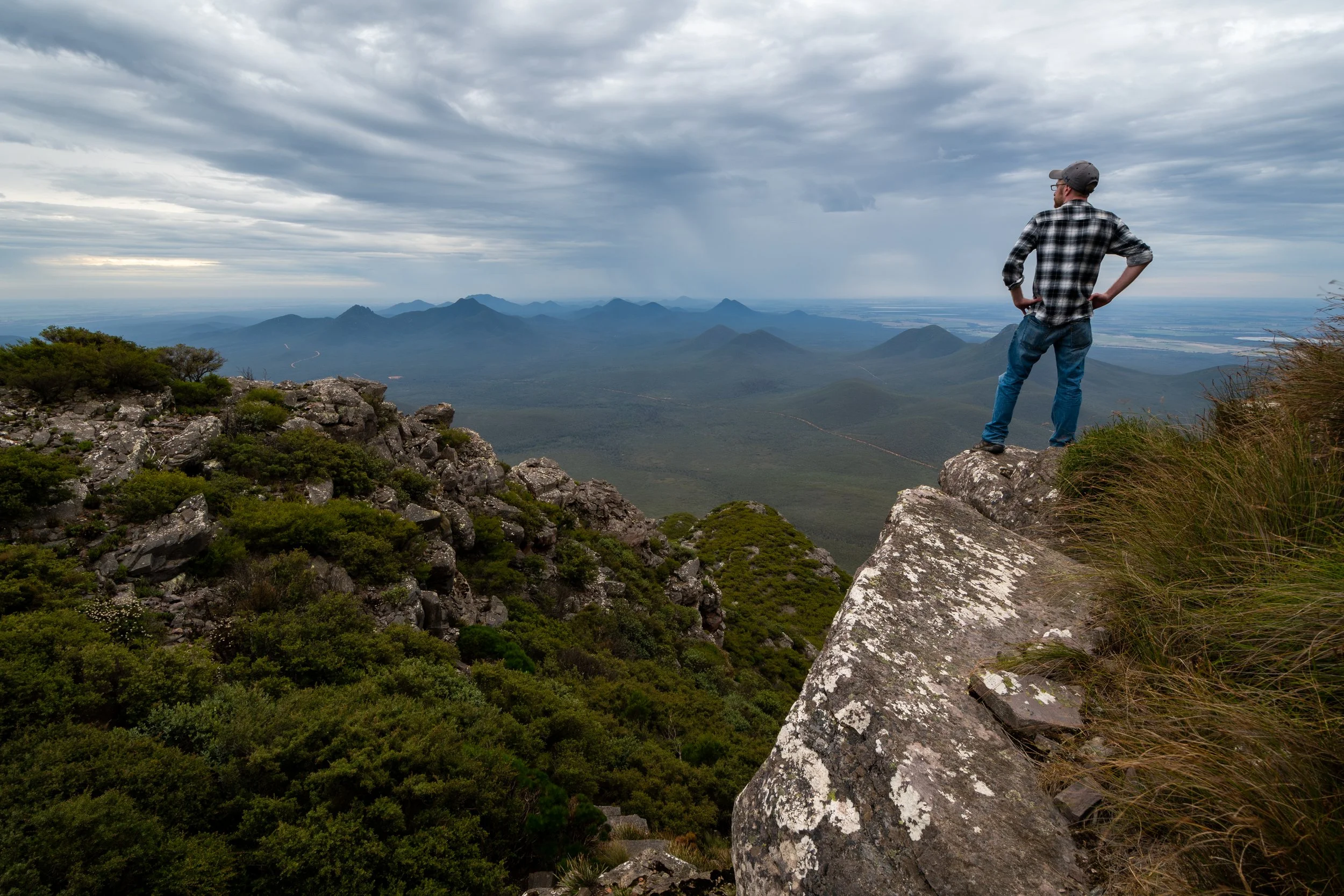
My recommendation is that the first lens you should buy for landscape photography is a wide angle lens. A wide angle lens is, as it sounds, a lens that lets you shoot a wide field of view. Having such a wide field of view lets your images appear to be viewed in an almost first person perspective. This allows the viewer to feel as though they are standing in your shoes and viewing the landscape firsthand.


Many times while shooting landscapes you are presented with a scene that you will want to capture as much as possible. A river flowing to mountains, waves coming up to the beach, and colorful sunsets. A wide angle lens lets you put all these interesting element together, capturing them in a single photograph fully conveying the grandeur of the natural scene.


A wide angle lens is a good first choice because it helps you learn discipline while taking landscape photographs. When you get your first wide angle lens and head out for a hike you will want to take pictures of everything, as you should. You will quickly learn that shooting wide will include many distracting elements that are unpleasing or do not contribute to the image. This will force you to be more cautious of what you shoot and be mindful of what the main subject is. This also helps you learn how to emphasize that subject using other element.


My first big DSLR lens purchase (besides the included kit lens) was a AF-S DX NIKKOR 10mm-24mm f/ 3.5-4.5 wide angle lens. (The lens was an APS-C crop sensor lens. This meant the focal length was multiplied by a factor of 1.5x. The actual mm of the lens was 15mm-36mm.)


I was immediately impressed by the upgrade in quality as well as the ability to shoot at a wider angle. I bough the lens a week before I took a road trip to the Southwestern United Sates, canyon country. In places like Bryce Canyon and Arches National Park I would find myself in a situation where I was on a cliff overlooking a canyon or in front of a large rock monolith. Though I was inexperienced at photography at the time and didn’t capture portfolio worthy images, I still was able to understand the compositions would not have been possible without a wide angle lens.

Bald head Torndirrup Australia

ISO 100. F/11. 5 sec. 12mm (18mm full frame equivalent) AF-S DX NIKKOR 10mm-24mm f/ 3.5-4.5

Watch how I captured the above image on YouTube:‍ ‍Australia Through The Lens: Western Australia

The above image was shot at 18mm. Shooting this wide allowed me to get the rocks in the foreground as well as the ocean and islands in the background. The clouds held a lot of interest in this scene so I wanted to include them as well. Using such a wide field of view really helps to convey the scale of the landscape by including multiple elements from different distances from the lens. In this image the rocks are in the immediate foreground. Then Then the trail and point are in the mid ground followed by the islands and the sky in the background. Aligning all these elements helps to lead the viewers eye through the image.


What is a wide angle lens?


A wide angle lens is a lens that has a focal length of 35mm or shorter.

There are also three subcategories when it comes to wide angle focal lengths:

Standard wide angle: 24mm-35mm

Wide angle: 16mm-24mm

Ultra wide angle: under 16mm

Typically wide angle lenses on the market have a focal length of 16mm-35mm (full frame) or APS-C equivalent based on crop factor. These lenses cover the standard and wide angle category and are most useful for landscape photography. When you get into ultra wide angle lenses you will start to get a fisheye effect. This can be useful if you plan on shooting astrophotography but for typical landscapes the fisheye effect is generally not pleasing.

ISO 100. F/8. 1/5 sec. 14mm (21mm full frame equivalent)

AF-S DX NIKKOR 10mm-24mm f/ 3.5-4.5

When taking this image I had a very limited amount of space to compose my scene. I was able to achieve my desired composition by using a wide angle lens. I was able to frame the image just so that I was not cutting off the bottom of the rock, or the top of the waterfall. Many times while out doing landscape photography you will find yourself in situations where you are very close to your subject, this is where a wide angle lens is a necessity.

Watch how I captured this image on YouTube:

Australia Through The Lens: Atherton Tablelands


Does the F-Stop Matter?


Not really. F-stop measures the depth of field your camera lens can handle. This gives you the blurry background bokeh effect. When shooting landscapes you want to try and have the image sharp through, which generally means you will be shooting at an f-stop of f/8-f/11. Lenses have either a fived f-stop or a variable f-stop. My first lens the trusty NIKKOR DX f/3.5-f/4.5 10mm-24mm has a variable f-stop. If you look at the numbers in the description that means that at 10mm the lowest f-stop the lens can achieve is f/3.5. When the lens is zoomed to 24mm the lowest f-stop is f/4.5. This doesn’t concern me as when I shoot landscape I am usually between f/8-f/11, those f-stops are achievable at any focal length.

Generally speaking a lenses with a fixed low f-stop will produce sharper results, but at a higher price-point.

Shooting this image at an f-stop of f/11 allowed me to achieve sharpness throughout the image from the river in the foreground, to the mountains in the background.

Watch how I captured this image on YouTube:

Solo Backcountry Camping in Yellowstone

yellowstone national park

ISO 64. F/11. 8 sec. 24mm NIKKOR AF-S 16mm-35mm F/4


Wide angle vs telephoto.

So why not start with a telephoto lens? A telephoto lens is great for landscapes that are at a distance. Far away mountains, secluded islands, ect. They can also really help to remove distractions and isolate your subject. At least for me, when I use a telephoto lens I find it harder to make an image not appear flat. You really have to be a good distance from your subject to clearly translate the vastness in a landsacpe.

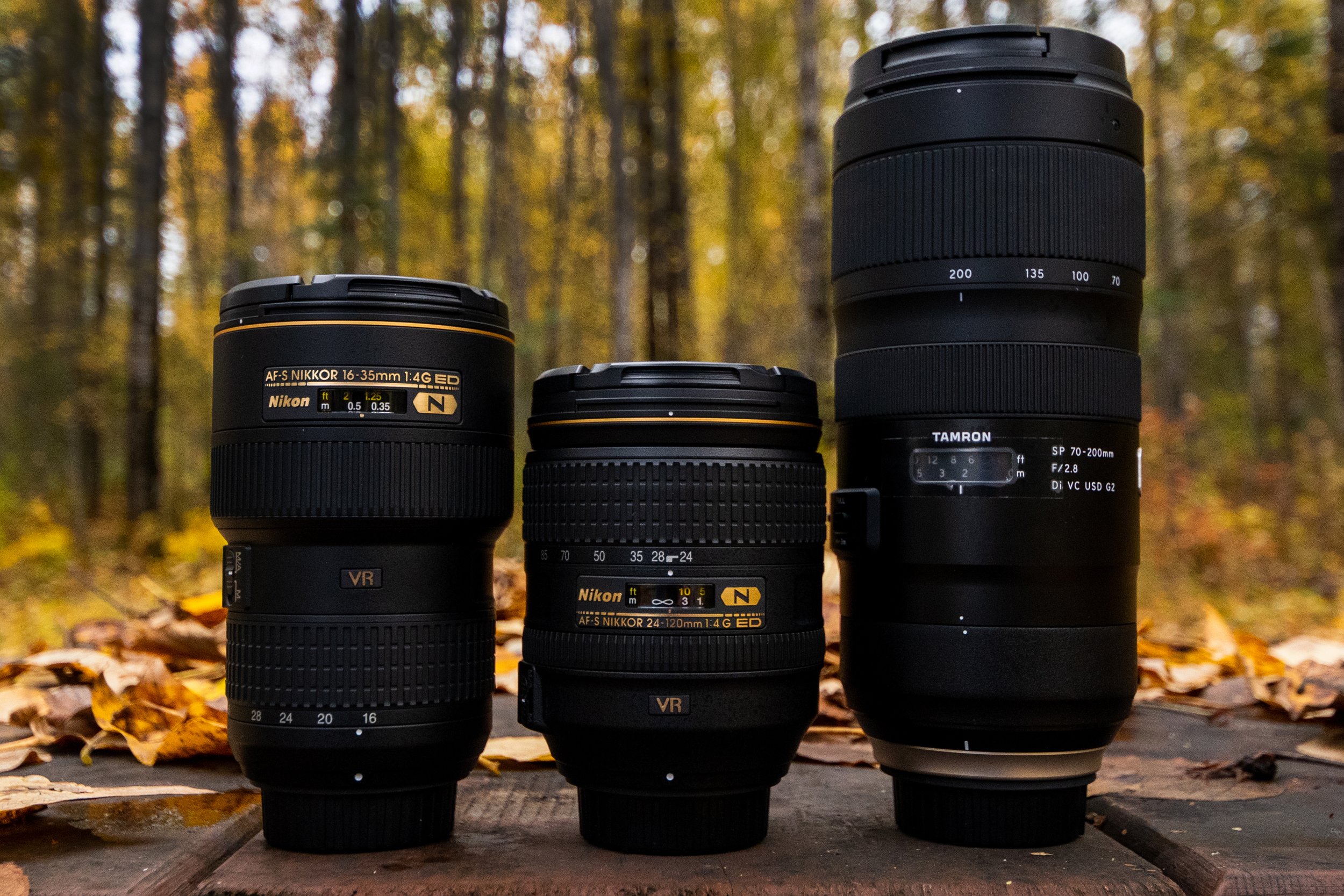
Don’t get me wrong, telephoto lenses are a great addition for a landscape photographers kit. They can really help you create unique and artistic images. In my experience, the opportunity to use a telephoto lens comes few and far between. I use my wide angle lens way more than my bulky 70mm-200mm.

ISO 64. F/11. 820sec. 180mm Tamron 70mm-200mm F/2.8

ISO 64. F/13. 6 sec. 35mm NIKKOR AF-S 16mm-35mm F/4

The two above images were taken on the same day about a half hour apart. The one on the left was taken at 180mm, the one on the right at 35mm. It took me much longer to frame up the foreground to the background when using the telephoto lens. When you zoom in that much every inch you move your camera can make or break the image, adding distracting elements. The image on the right was easy to frame and shooting wide may make distractions less obvious.

Personally I prefer the image on the right. I think the left image looks more confined and flat while the one on the right looks more open and vast.

Its all personal preference on which you prefer, but I do believe when starting out in landscape photography using a wide angle lens has much less of a learning curve.


Which wide angle lens to choose?

It’s best to invest the money in a good lens from the start, if your budget allows. Buy once, cry once as they say. Look for a lens in the 16mm-35mm range (full frame) or an equivalent mm if you are shooting an ASP-C. It would also be ideal if the lens is weather sealed as you will most likely be taking it out in harsh conditions and need all the extra protection you can get.

There is nothing wrong with buying a used lens as well. Research lenses that will work with your camera and fit your budget. Read reviews and even go to your local camera store to try them out.

My lenses:

NIKKOR AF-S 16mm-35mm F/4

AF-S DX NIKKOR 10mm-24mm f/ 3.5-4.5

I shoot Nikon and I have used these two lenses for about 10 years. Every wide angle image in my portfolio was shot on one of these lenses and I highly recommend them as they have great image quality.