
Nepals First NAtional park
There are approximately 700 rhinos in Nepal. Before our 2023 trip to Asia I had no ideas there were rhinos in Nepal. The country is mostly known for mountain trekking in the shadow of the Himalayas, and the world highest peak, Mt. Everest. If you decide to venture south, the foothills give way to hot humid jungle that holds and abundance of wildlife that is protected as a national park.
Chitwan National Park was founded in 1973 and is Nepal’s first National Park. The park covers around 230,000 acres of subtropical lowlands. Chitwan National Park is home to an abundance of flora and fauna. The park is a refuge for Bengal Tigers as well as it holds one of the last populations of one-horned rhinoceros.
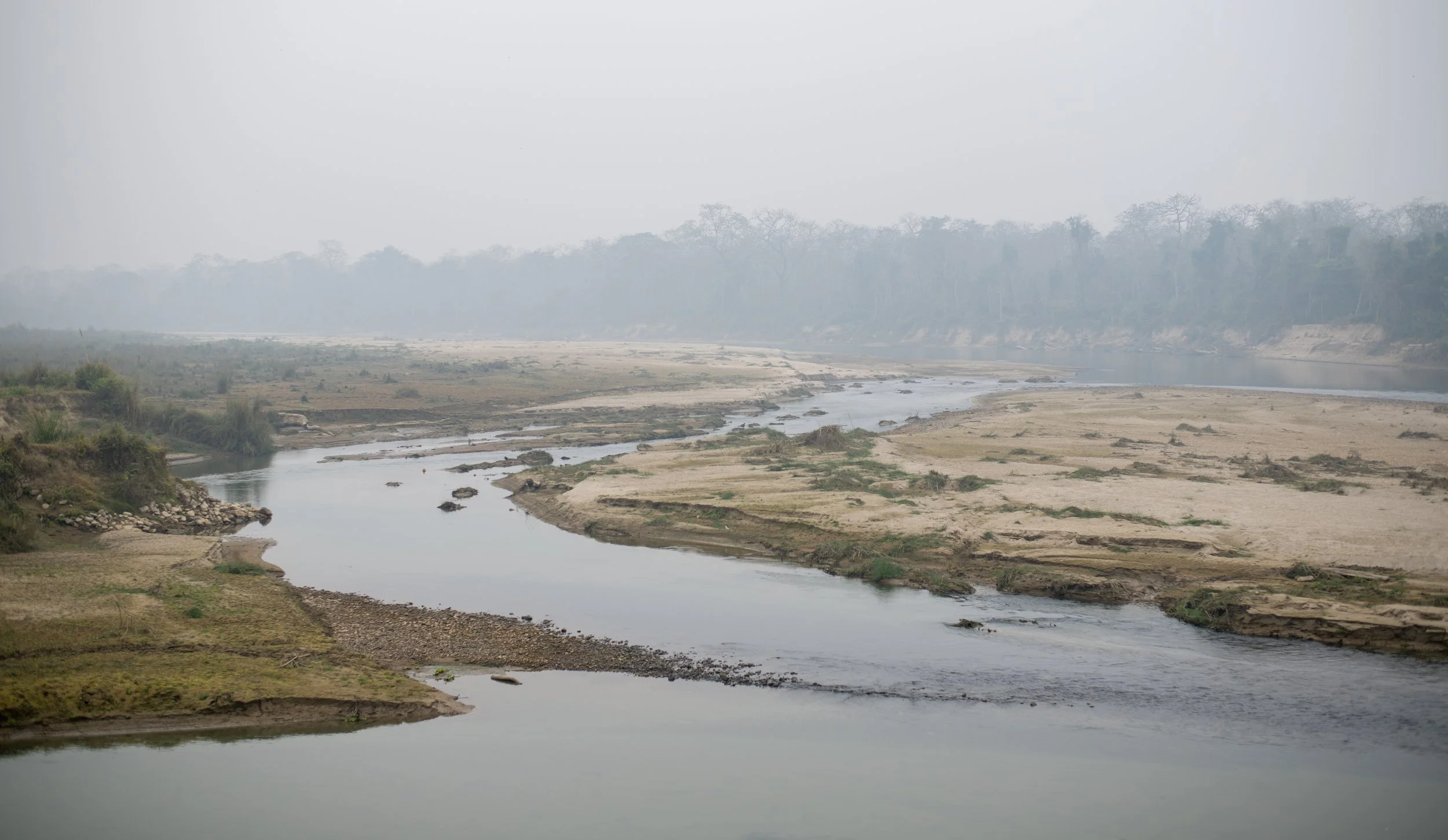
We were there in January and an eerie mist frequently lingered across the East Rapti river shrouding the jungle.
Sauraha
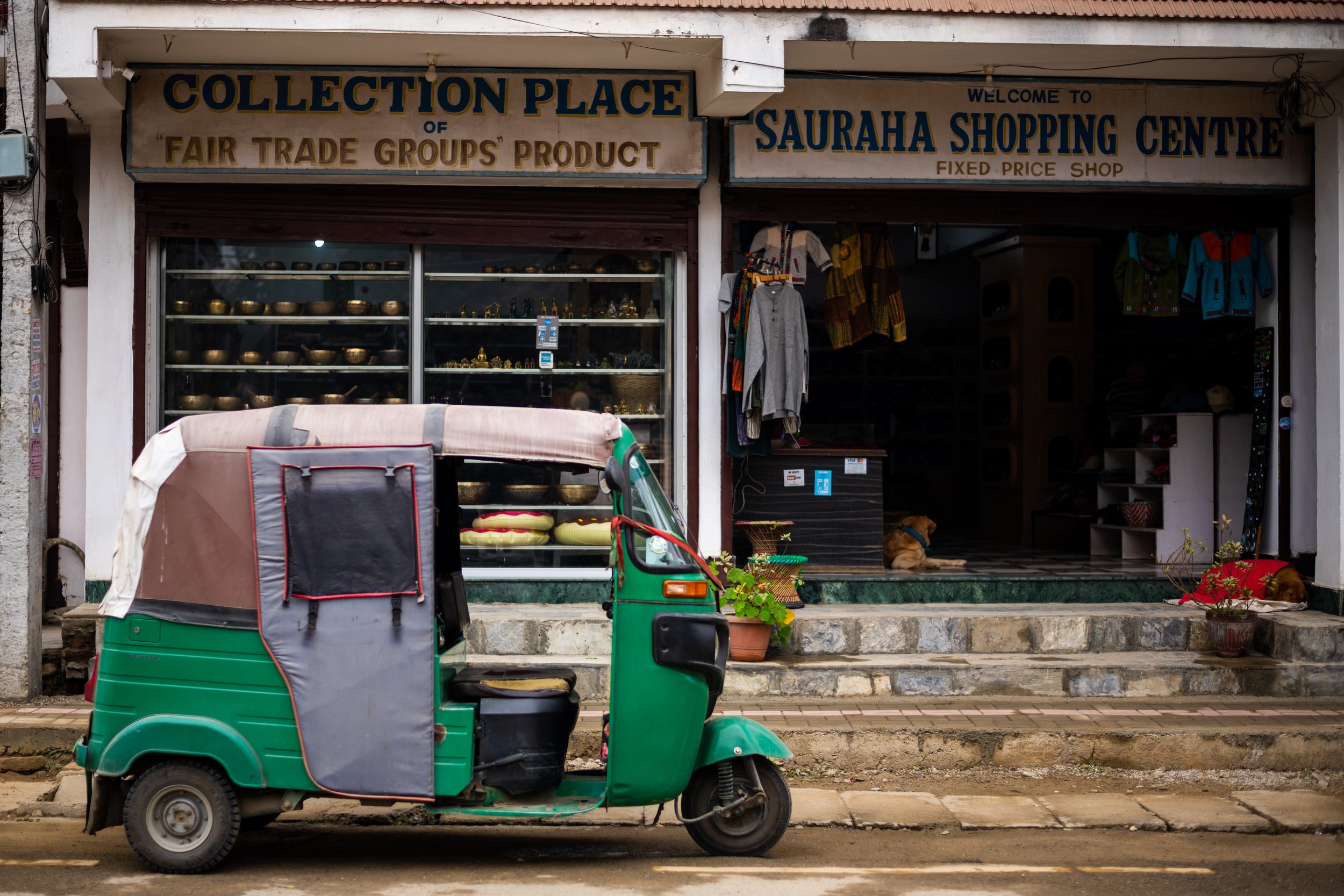
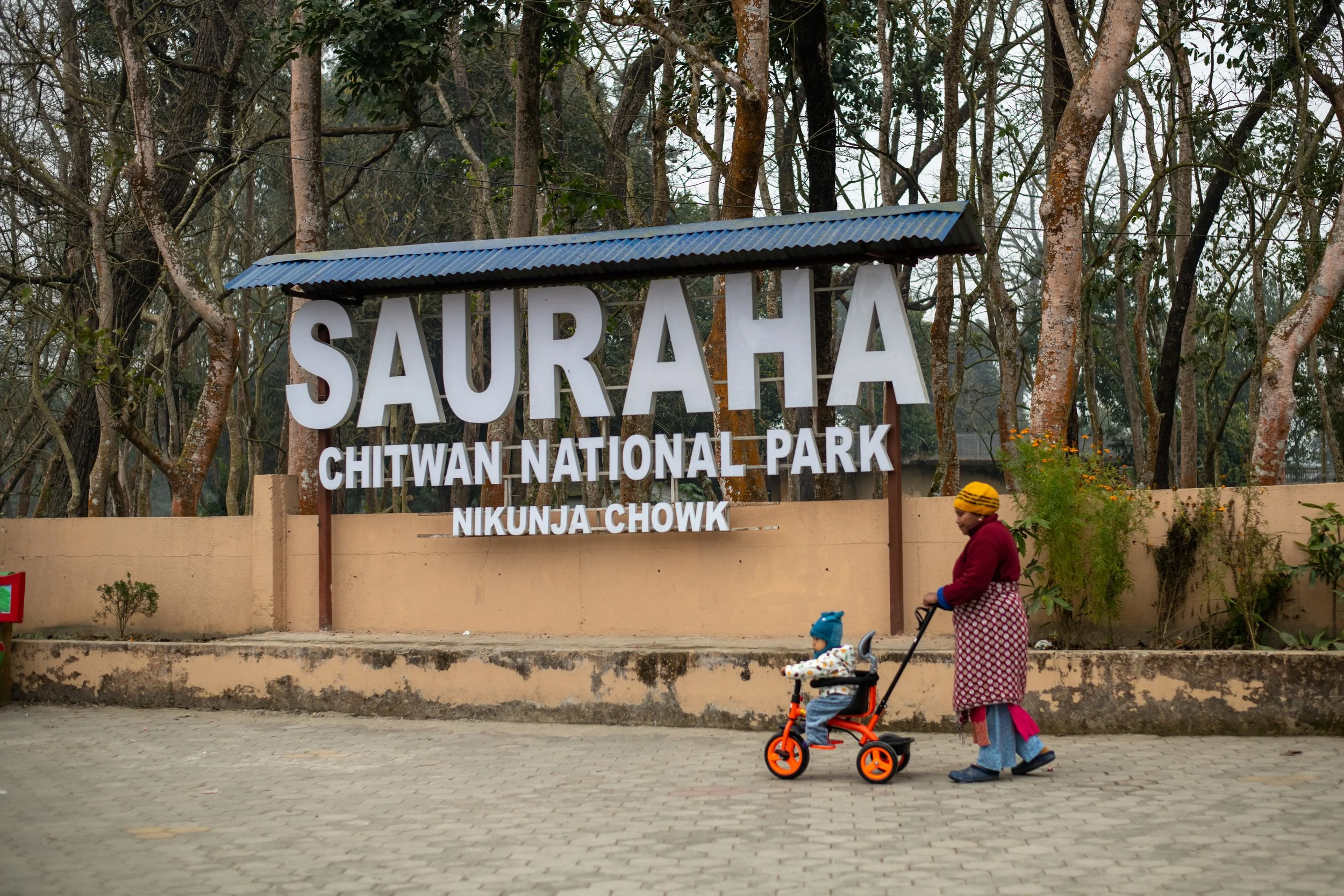
Sauraha is a border town to the north of Chitwan. It is separated from the national park by the East Rapti River (see above photo). No bridges cross the river so you must enter the park by boat, with a guide. It is a charming town with safari vendors around every corner. Souvenir shops and restaurants line the main stretch selling interesting trinkets and delicious pork.
To get to Sauraha we took a bus from Kathmandu, then a tuk tuk. The whole journey took about 8-10 hours as we had a bit of trouble finding a bus to take us where we needed to go. There are many good hotels to stay at that sit right along the river. One of the attendants where we stayed would knock on our door if the rhinos could be seen in or across the river. We were woken up a few times in the morning to see rhinos, as well as elephants wading across the river. The rhinos can frequently be seen in town as well, walking down the roads making the safari trucks pull to the side. The locals don’t care much for these visits as they can be a nuisance causing damage to property.
Safari
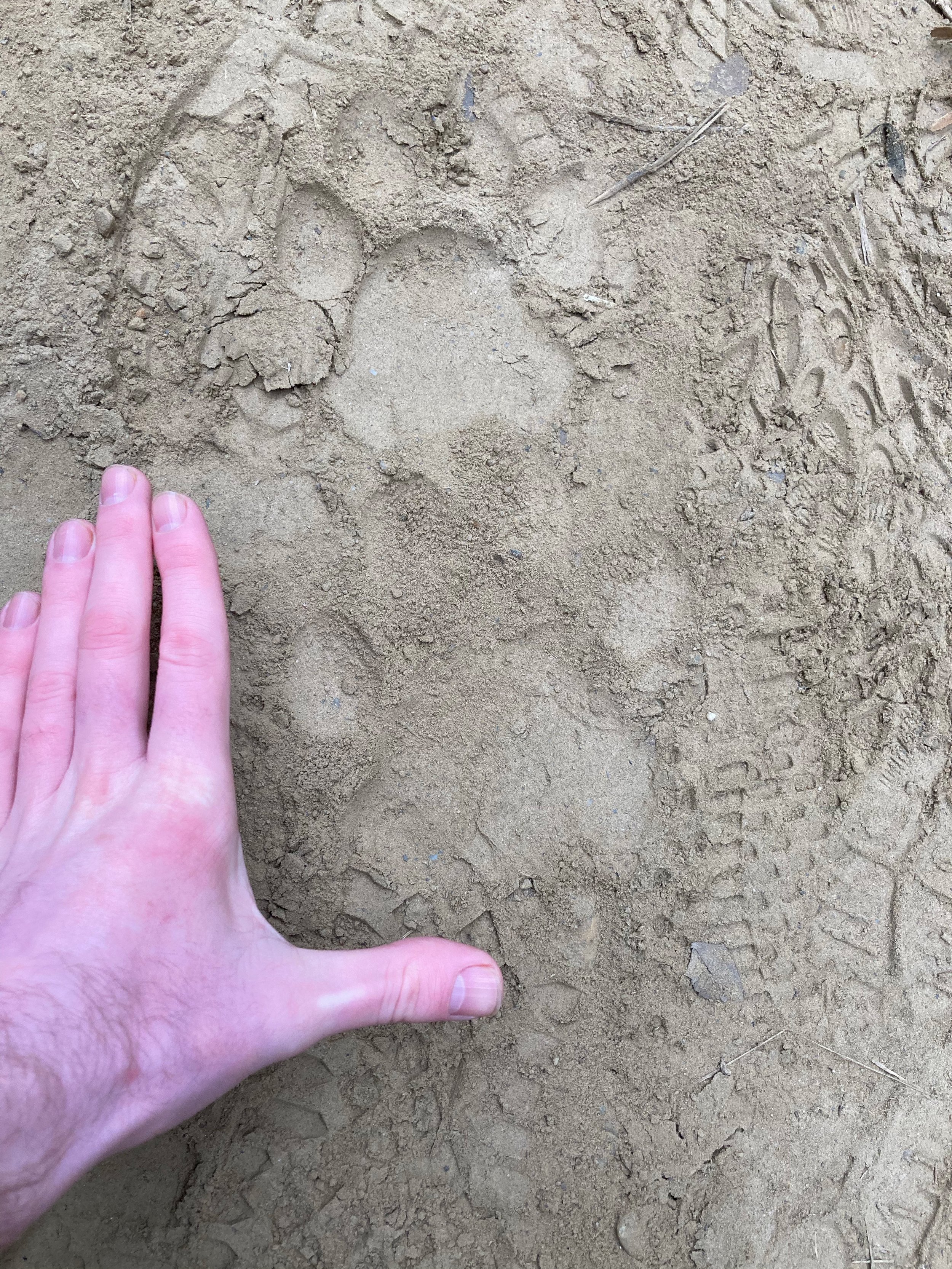
Tiger tracks
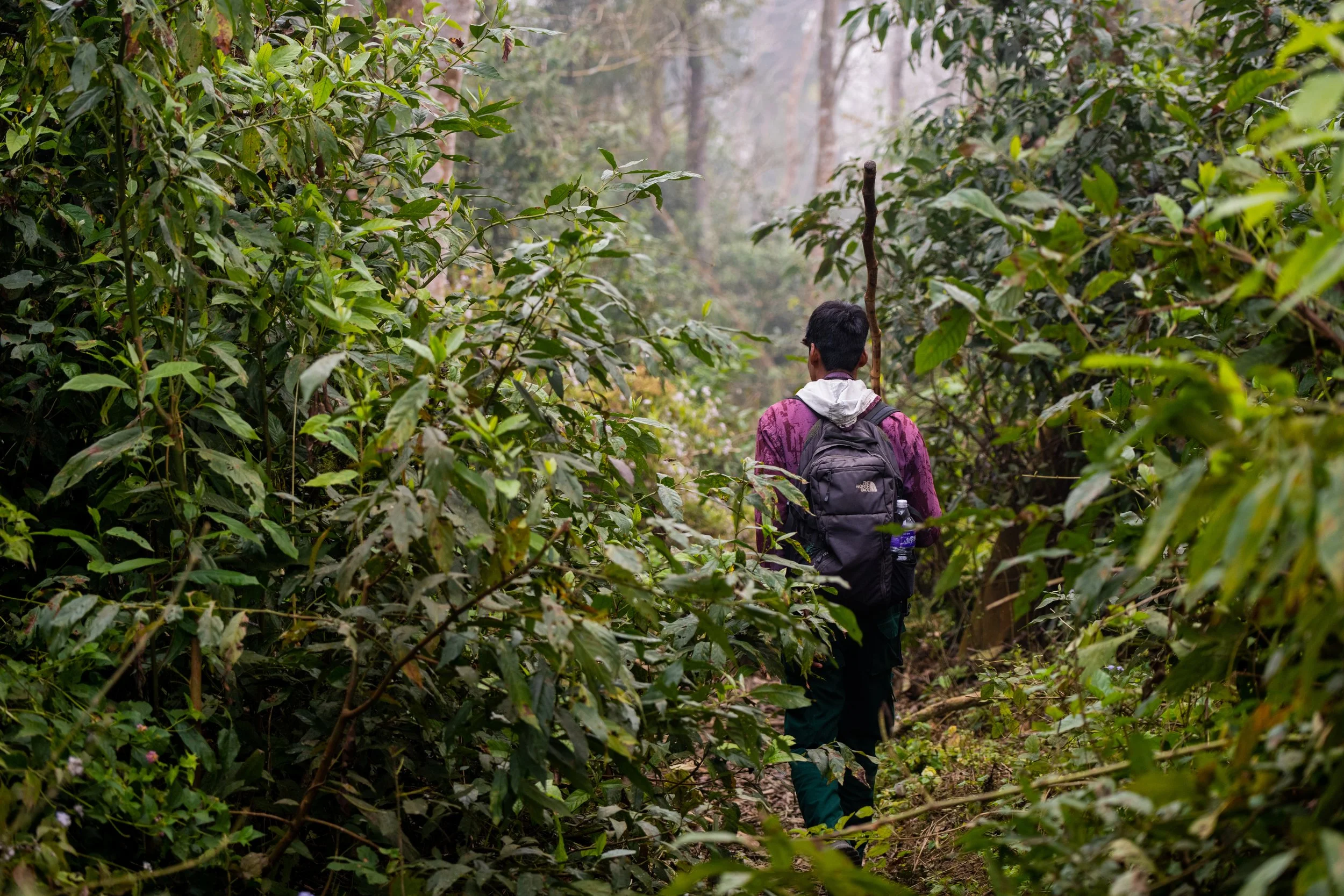
Our fearless guide (also the hotel dishwasher)
In order to enter Chitwan National Park you need to be accompanied by a licensed guide. We ended up taking a private walking tour offered by our hotel. We woke up at sunrise eagerly ready to go and find some rhinos. I was very keen on getting into the jungle to photograph wildlife, this tour did not disappoint.
Our two guides turned out to be kitchen workers from our hotel that spoke decent english, enough to communicate at least. We set off directly from the hotel courtyard walking down to the river. We then got on some small canoe like boats with a group of others. After crossing the crocodile inhabited river we made it to shore and set off on our own way, just the four of us.
Armed with nothing more than sticks and the knowledge of the area our guides led us into the jungle. I was thrilled. I love exploring the natural world on foot searching for wildlife and venturing into new areas. This was truly a new land I was experiencing. Not long into the morning hike we crossed a road frequently traveled by jeeps. Our guide calls us over and points out tiger tracks. The track were from the morning. I knew there were tigers in Chitwan but I knew they were rare to see. Seeing the fresh tracks was very sobering , and exciting. If we had any issues help was miles away. We were on foot, miles away from civilization with a river crossing blocking our path.
We continued onwards into the jungle, on our quest to find and photograph rhinos.
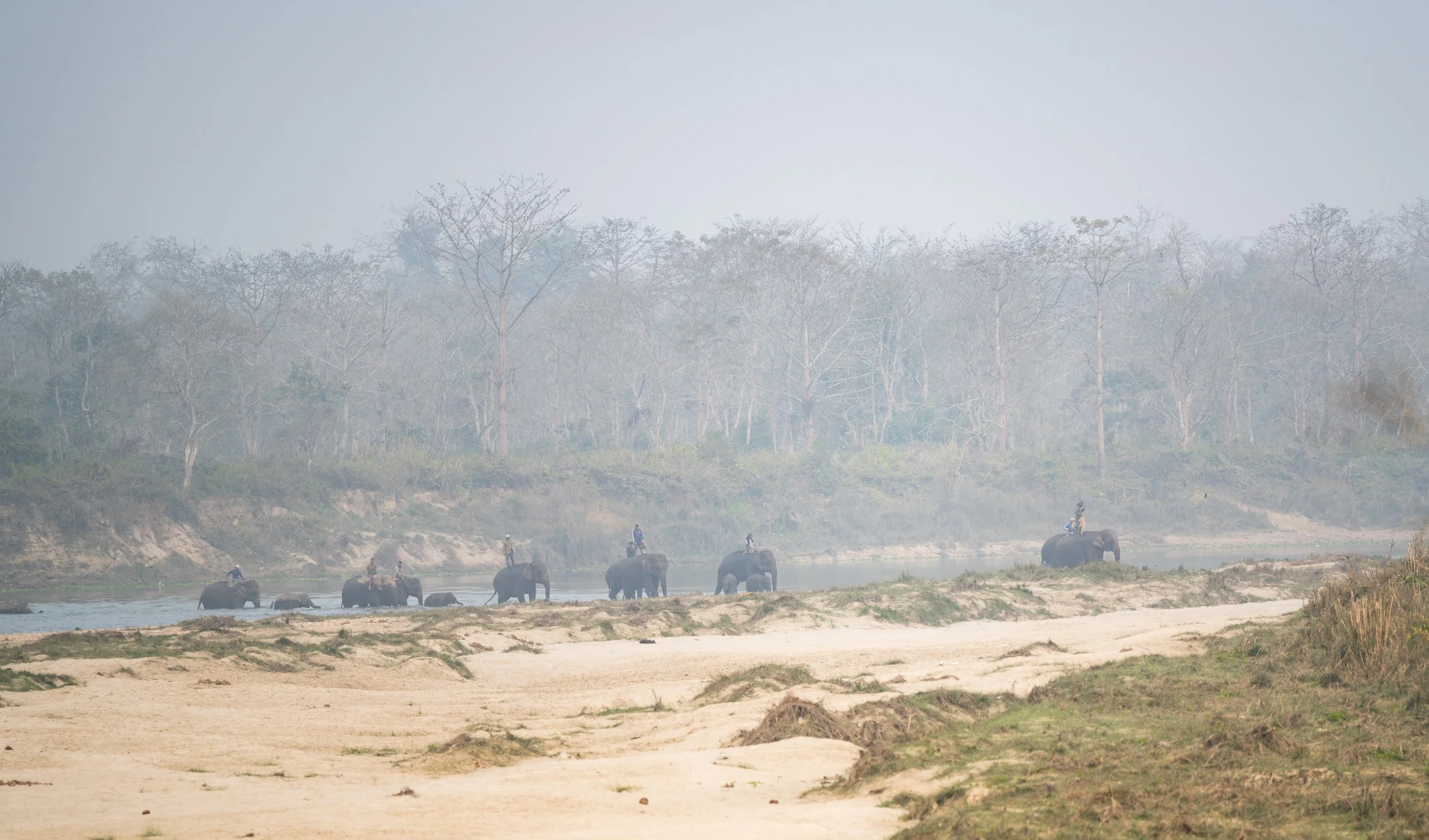
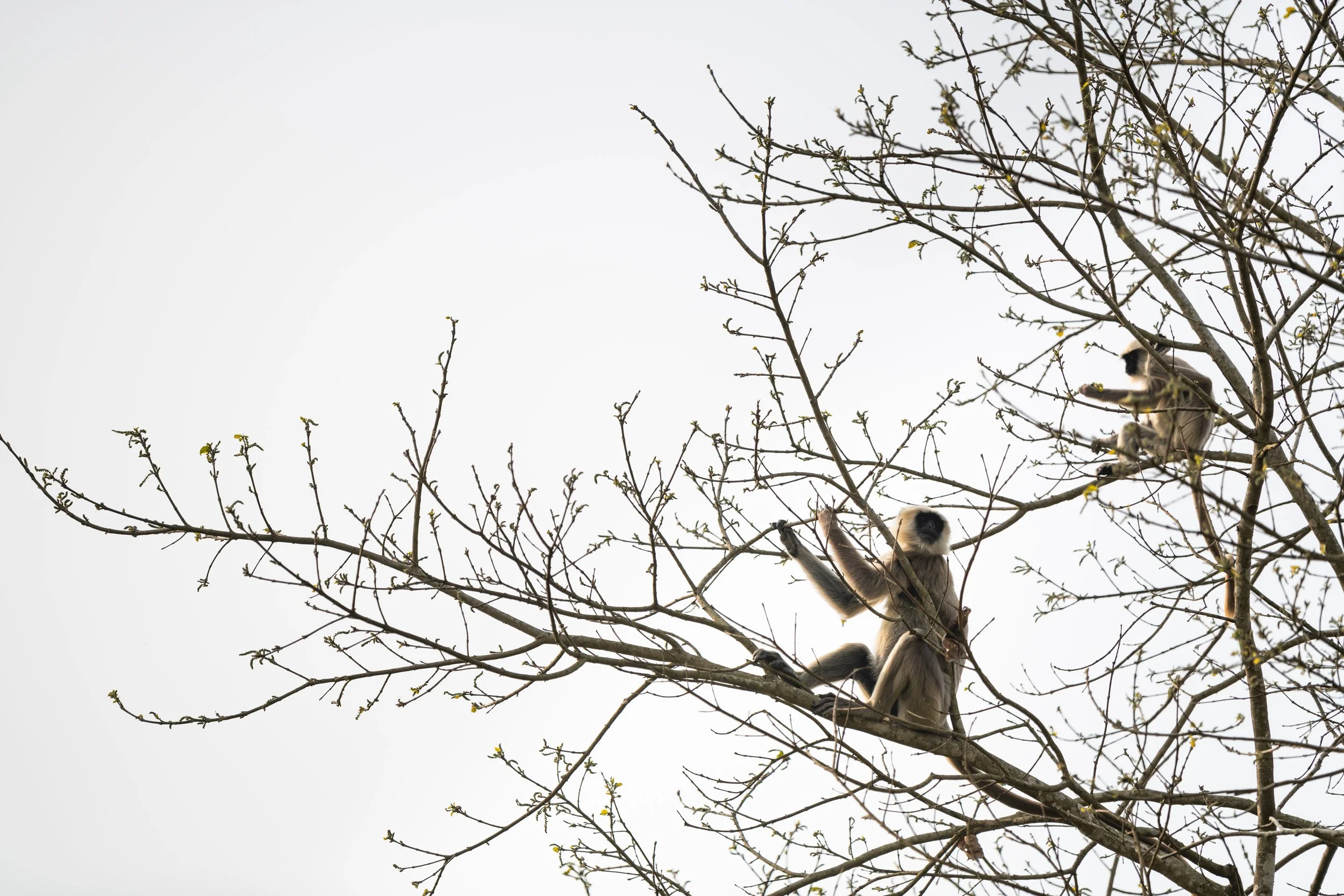
Along the way we did spot some wildlife. We saw a family of gray langurs in the trees and was able to get an image, before they fled away. While stopping to rest we saw a group of elephants being ridden in the distance. In Nepal, elephants are still used to patrol Chitwan from poachers as elephants are able to navigate the thick jungles much better than any other means of transportation.
Rhinos
While hiking in the thick forest our guide abruptly stopped and told us to be quiet. Rhino he said. We ducked into the trees and began to slowly creep towards an area he knew rhinos could frequently be seen. Then all of the sudden it seemed like a car was crashing through the brush. Rhino!, the guide cautiously said. We were in some thick vegetation so it was hard to get a good look at him and even harder to get a good image. The rhino began pacing side to side and appeared to charge us for a moment, but our guides yelled and scared the rhino away. With the rhino gone we headed out of the thick vegetation into more open area with the hopes to see more wildlife.
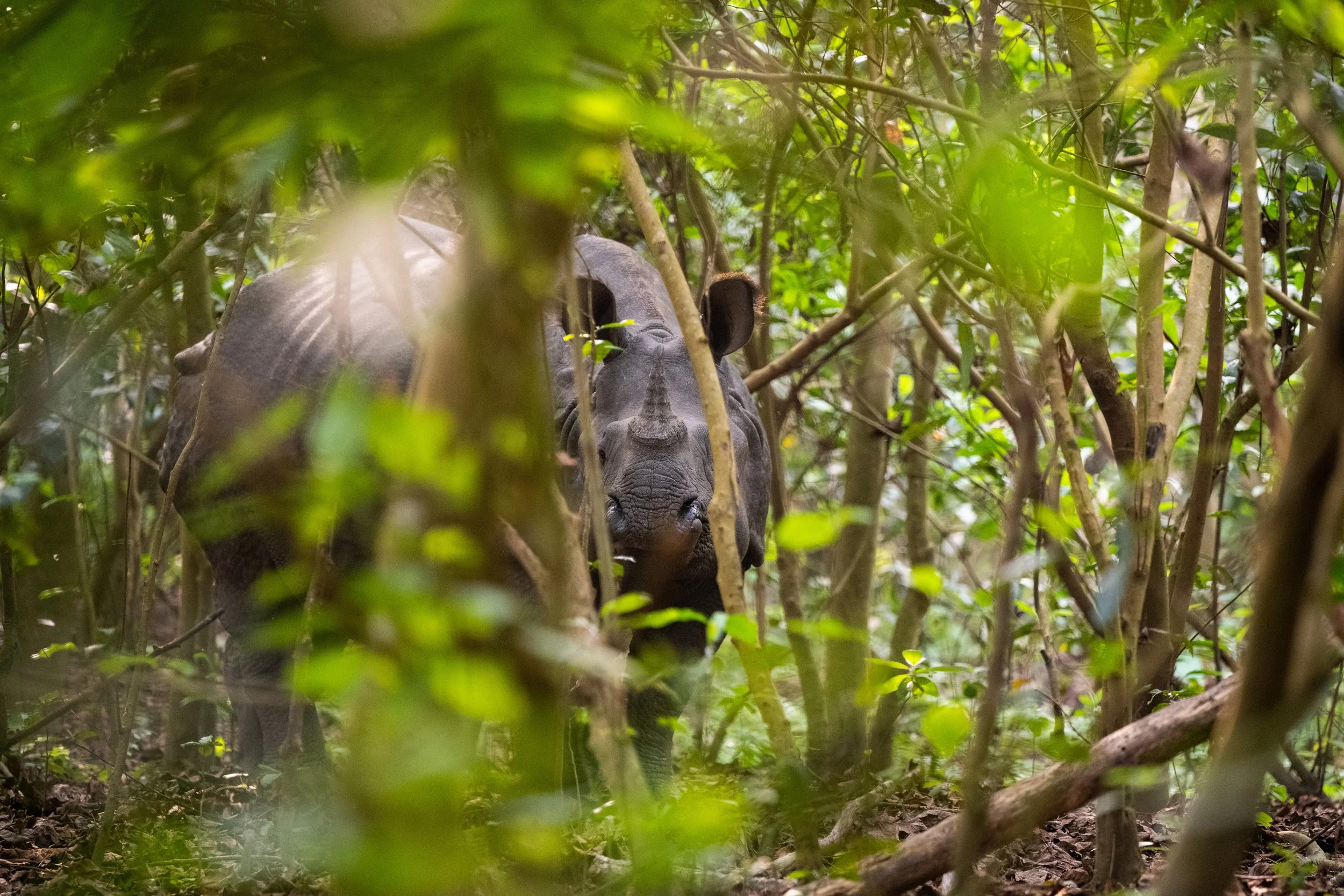
For me, It was very unusual to see such a large animal in thick jungle.
We hiked out of the jungle and came to a more open area that had tall elephant grass. The grass was about 10 feet high and the guide stressed how dangerous it could be because rhinos and elephants can hide in the grass just feet from the trail and we would never see them. They say the most dangerous animal in Chitwan is a wild bull elephant.
After going a mile or two in the tall grass we rounded a corner and all four of us froze in our tracks. There was a rhino blocking our way. It was about 30 yards in front of us and it knew we were there. It was staring right at us and since I was holding my camera I was able to get a few pictures, the pictures I was after. The guide slowly backed us up and thats when the rhino started moving towards us. He started to pick up speed and the guides started yelling and waving their sticks. If it charges try to run zig-zagged they advised us. As the rhino closed distance it cut off on a perpendicular game trail and the last moment and disappeared into the tall elephant grass.
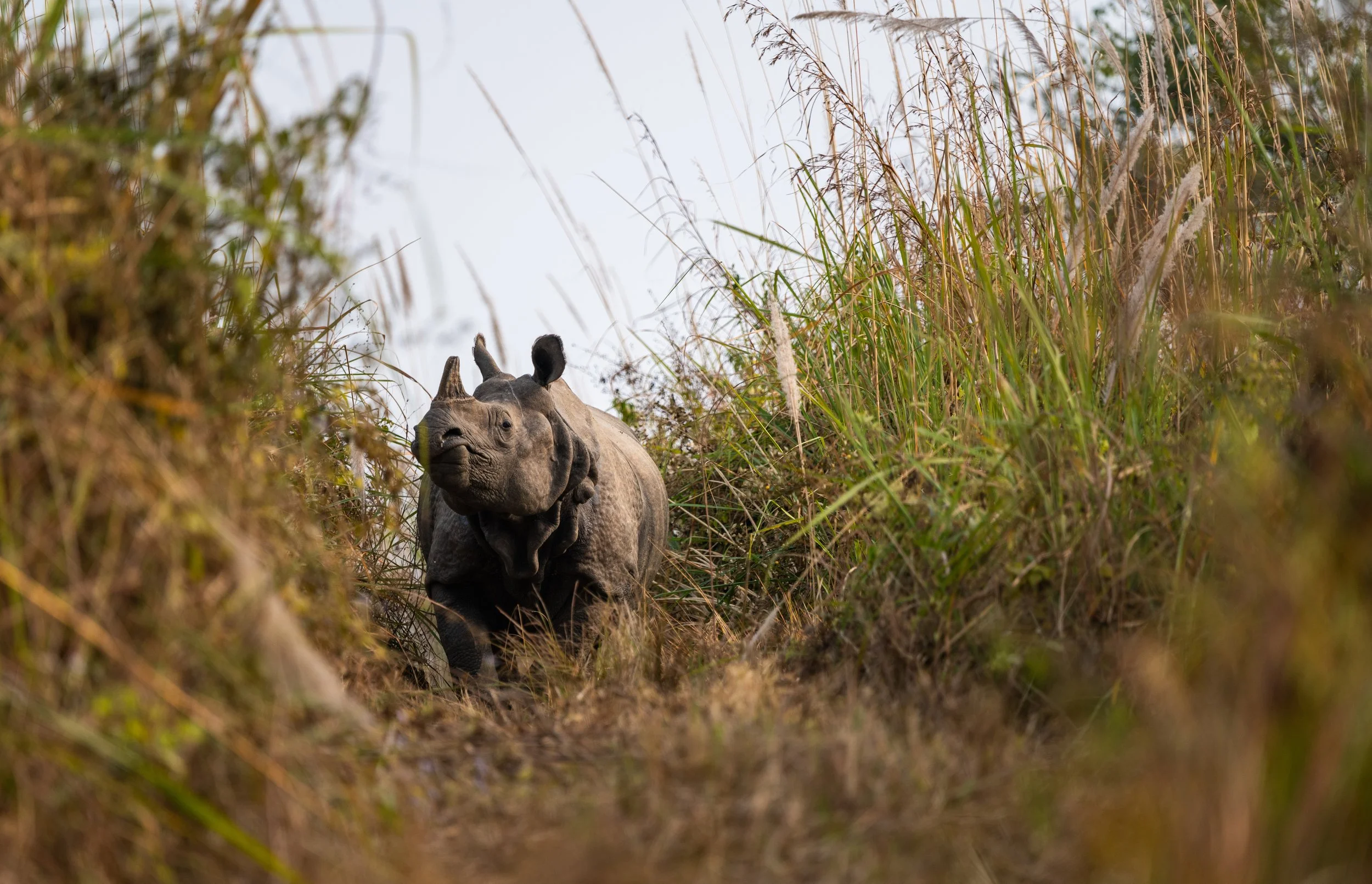
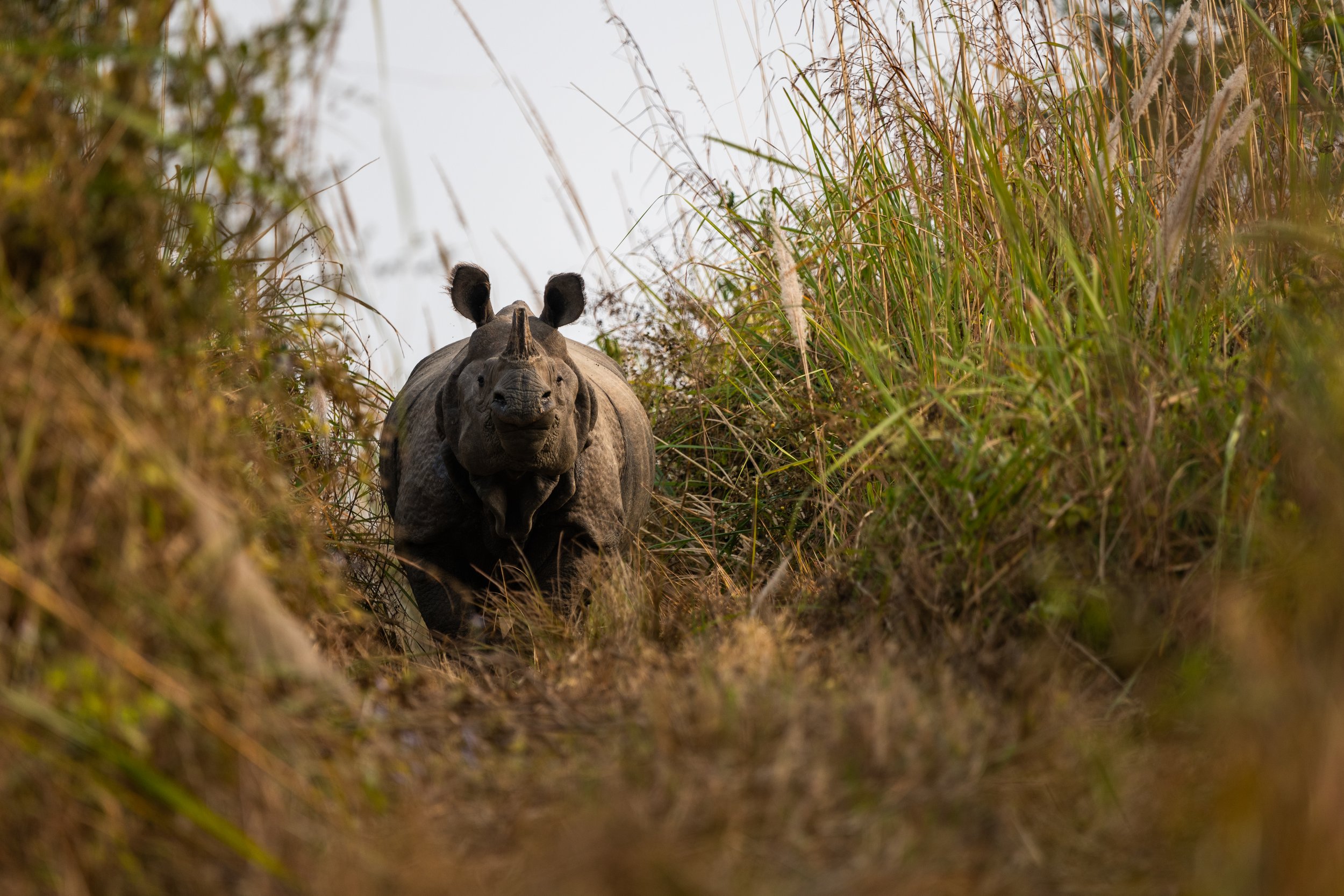

Dwarfed by the elephant grass the one horn rhino stares us down showing he is a heavyweight of the jungle.
Chitwan National Park is an amazing place to visit. Accommodation and safaris are inexpensive and the wildlife is diverse and relatively easy to see. I cannot recommend enough to add it to your future travel plans.